“And we’ll need some brand guidelines.” It’s a phrase we often hear when talking to a client about a new brand or brand evolution. And of course they do. A new identity needs to be understood and used consistently once it leaves the studio. But who is actually going to use it? It’s worth knowing before we decide what it should contain.
Who’s using it
There was a time when a brand guidelines document or ‘brand bible’ could quite reasonably be a hefty PDF covering every possible use of an identity. The people using it were often designers — an in-house design team, a marketing agency or a network of suppliers. They understood the language used by designers and relied on guidelines to reproduce a brand consistently.
Exclusion zones. Document grids. Colour breakdowns. Typographic hierarchy. Logo relationships. Print specifications. All useful things, if you know what to do with them. But the people making the decisions about the brand aren’t always the people who’ll use it.
We’ve seen this first-hand. We helped VROC launch a specialist orthopedic pet surgery in Austin. They needed the brand to work across an entire new facility, from signage and uniforms to marketing materials so had to serve multiple suppliers along the way. Childnet create most of their communications in-house, so their guide needed to make it easy for the team to understand and communicate who they are. Euromoney, has an in-house design team working across a more complex system. Alongside evolving their identity and website, we created detailed guidance and templates for everything from digital reports to Word and PowerPoint.
Three very different organisations, three very different ways of using a brand. The guidance needed to reflect that.
Build for the job
The tools used to make things have changed. Canva, Figma and AI tools mean more people are able to create their own materials, quickly and with more control. That’s a good thing. But it means we need to think about the people actually using the brand. Maybe it’s mostly social media, presentations, reports, fundraising materials or email newsletters. It could be packaging, signage, printed materials or exhibitions. The work might be handled by one person, an in-house team, an external agency, or a combination. These details should shape the guide we build.
A charity producing most of its communications in Canva has different needs from a property company whose brand is being implemented by an external agency. Perhaps the question shouldn’t be What should the brand guidelines contain? but instead:
- What are you going to make?
- How are you going to make it?
- And who is going to be making it?
Sometimes the answer will be a detailed guide. Sometimes it will be templates and practical examples. Sometimes it’s both. We don’t need to make guidelines simpler, we need make them appropriate.
Rules aren’t enough
As designers, we think about what another designer might need to know. Typography, colour, spacing, grids — all of this matters when another designer is using the system — but someone making a social post doesn’t need to know. They need to know which assets to use, which template open, how the brand should feel and what good looks like.
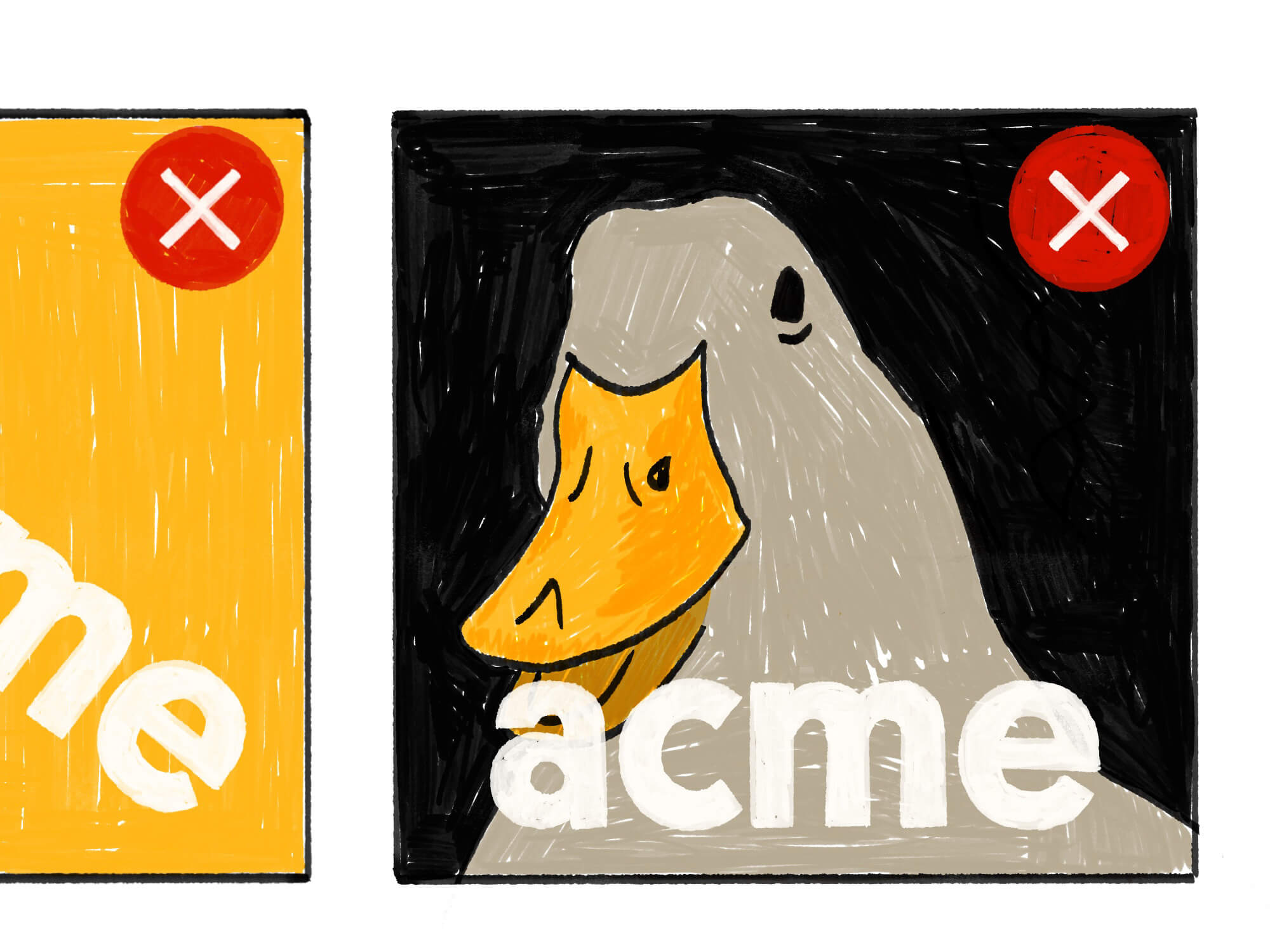
Consistency isn’t the same as being on brand. You can use the correct logo, colour and typeface and make something that doesn’t feel quite right. A brand isn’t just a set of rules, it’s a set of decisions about how an organisation wants to be seen and understood. The best guidelines help people understand those decisions by showing the brand in use — in a report, email, or social post.
We need to give people examples they can learn from, not just rules to interpret. The aim isn’t to tell people how not to get it wrong. It’s to give enough direction to get it right.
Make it useful
A brand guide doesn’t have to be a whopping PDF that gets handed over at the end of a project before disappearing into a shared drive. If the brand needs to work for real people and changing needs, an online toolkit can bring together those principles, assets, templates and guidance. It can evolve. New templates can be added, guidance updated and new tools included as things change. A growing organisation might start with simple Canva templates and later need a more detailed system for an in-house design team. The system can grow with them.
That doesn’t mean a PDF is always wrong. Sometimes it’s exactly what’s needed, but the format should be part of the conversation.